


Nitin Gadkari Calls E20 Criticism Paid Campaign as Govt Allows E100 Fuel
Nitin Gadkari calls the anti-E20 campaign paid propaganda as India permits E100 flex-fuel vehicles. Learn what changes for motorists, mileage and costs.
 Rajeev


From E20 Controversy to E100 Approval: Why India's Ethanol-Fuel Debate Is Far From Over
The government has cleared the regulatory path for vehicles running on nearly pure ethanol. But as Nitin Gadkari rejects criticism of E20 petrol as a paid campaign, a more immediate question confronts Indian motorists: what fuel can their existing vehicles safely use?
NEW DELHI | OCTOBER 27, 2026
For millions of Indian vehicle owners, the letters and numbers printed beside petrol pumps have become unexpectedly important.
E10. E20. E85. And now, E100.
What once appeared to be a technical discussion about fuel composition has grown into a national debate involving government policy, vehicle manufacturers, farmers, environmental concerns and consumers worried about rising motoring costs.
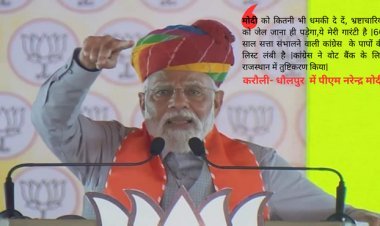
At the centre of the controversy is Union Road Transport and Highways Minister Nitin Gadkari, who has described opposition to E20 petrol as a paid, politically motivated campaign.
The allegation has resurfaced in reporting as the government moves forward with another major ethanol-related reform.
On October 26, the Ministry of Road Transport and Highways announced amendments to the Central Motor Vehicles Rules, 1989, expressly recognising E100 alongside E85 in provisions governing vehicle emission certification.
The amendment opens the door for automobile manufacturers to introduce vehicles designed to operate on fuel containing almost entirely ethanol.
However, there is an essential distinction.
The government has not ordered every petrol vehicle in India to switch to E100.
The new provisions apply only to vehicles specifically designed and certified by manufacturers to use high-ethanol fuels.
Existing conventional petrol vehicles, including those compatible with E20, do not automatically become suitable for E85 or E100.
That distinction is crucial as India expands its ethanol ambitions while motorists continue questioning the practical consequences of higher fuel blends.
What Did Nitin Gadkari Say About the Anti-E20 Campaign?
Gadkari's criticism of the campaign against ethanol-blended petrol attracted attention during the annual convention of the Society of Indian Automobile Manufacturers in September 2025.
He alleged that criticism circulating on social media was financially supported and politically motivated.
According to the minister, the campaign was intended to target him personally rather than present a balanced assessment of ethanol blending.
He also defended the policy by referring to consultations with automobile manufacturers and technical institutions.
The minister argued that ethanol blending could reduce India's dependence on imported petroleum, support domestic agricultural production and help address pollution.
His remarks were widely reported at the time and have returned to the spotlight following the government's October 2026 E100 decision.
Has the 'Paid Campaign' Allegation Been Proven?
The distinction between an allegation and an independently established finding is important.
Gadkari has publicly alleged that the social-media backlash was paid and politically motivated.
However, the reports reviewed do not establish who allegedly financed the campaign or provide an independently verified account of such payments.
Consequently, the allegation should be attributed to the minister rather than presented as a proven fact.
It is also important not to assume that every concern about E20 petrol originated from political campaigning.
Some motorists have raised practical questions about mileage, compatibility with older vehicles and maintenance costs.
Those questions can be examined separately from allegations about the motives of particular online campaigns.
What Exactly Has the Government Changed?
The latest regulatory development concerns vehicles capable of using high concentrations of ethanol.
On October 26, the Ministry of Road Transport and Highways announced that the Central Motor Vehicles Rules had been amended to include E100 in relevant vehicle emission-certification provisions.
Previously, those provisions explicitly recognised E85.
The amendment now includes E100 alongside E85.
This allows manufacturers to obtain the necessary regulatory certification for appropriately designed vehicles.
Such vehicles must comply with applicable emission and safety requirements.
Why Is This Important?
Conventional petrol vehicles are generally engineered around particular fuel specifications.
High concentrations of ethanol may require different fuel-system materials, engine controls and calibration.
Flex-fuel vehicles are designed to accommodate a broader range of ethanol-petrol mixtures.
Depending on their certification, they can operate using petrol, intermediate blends or high-ethanol fuels.
Their engine-management systems adjust operation according to the fuel being used.
However, the range of permitted fuels depends on each vehicle's engineering and manufacturer certification.
A vehicle certified for E20 is not automatically certified for E100.
The government's notification is therefore an important regulatory step, not an instruction for motorists to immediately change fuels.
3. E10, E20, E85 and E100: Understanding the Difference
One of the biggest sources of confusion in the ethanol debate is the assumption that these fuels are interchangeable.
They are not.
| Fuel | Ethanol Content | Vehicle Compatibility |
|---|---|---|
| E10 | 10% ethanol | Vehicles approved for E10 |
| E20 | 20% ethanol | Vehicles approved for E20 and vehicles permitted to use the blend under applicable guidance |
| E85 | Up to 85% ethanol | Specifically designed and certified flex-fuel vehicles |
| E100 | Predominantly or nearly 100% ethanol | Vehicles specifically designed and certified for E100 |
The letter E refers to ethanol.
The number indicates the nominal ethanol proportion.
A flex-fuel vehicle may operate on several blends, but only those within the range approved by its manufacturer.
For consumers, this makes the vehicle's fuel-compatibility information more important than the assumption that all petrol-based fuels can be used in the same engine.
4. Will E100 Fuel Damage Your Existing Car?
This is perhaps the most important practical question.
For owners of ordinary petrol vehicles, the answer is straightforward:
Do not use E100 unless the manufacturer explicitly certifies the vehicle for that fuel.
Ethanol differs chemically from petrol.
It has different combustion characteristics, energy content and material-compatibility requirements.
Vehicles intended for high-ethanol operation may need specially selected seals, hoses, fuel-system components and engine-management settings.
Manufacturers design flex-fuel vehicles to accommodate these requirements.
Using a fuel substantially outside a vehicle's approved specifications can create performance and durability risks.
What About Cars Already Using E20?
E20 compatibility does not imply compatibility with higher blends.
A modern car designed for E20 may operate normally on that fuel but still be unsuitable for E85 or E100.
Owners should consult their vehicle manuals, fuel-filler labels and official manufacturer guidance.
The government has specifically clarified that existing vehicle owners are not required to modify their vehicles for E85 or E100.
The new amendment is intended to facilitate additional vehicle technologies rather than force the conversion of India's existing petrol-vehicle fleet.
5. Why Are Indian Motorists Concerned About E20 Petrol?
The E20 controversy has several dimensions.
The most common concern involves fuel efficiency.
Ethanol contains less energy per litre than conventional petrol.
This means higher ethanol blends can affect fuel consumption, although the real-world result depends on vehicle design, driving conditions and engine calibration.
Some motorists have reported lower mileage after switching to ethanol-blended petrol.
Others have questioned whether older vehicles can tolerate increased ethanol content over many years.
The government maintains that extensive testing and consultations have supported the E20 programme.
According to information released by the Ministry of Petroleum and Natural Gas in July 2026, studies suggest that certain vehicles originally designed for E10 may experience a fuel-efficiency reduction of approximately 3–5% when using E20.
However, individual results can differ.
Does E20 Automatically Damage Engines?
The government says testing by technical agencies and automobile manufacturers has not demonstrated widespread abnormal wear or serious compatibility problems under prescribed conditions.
Research has examined engine durability, corrosion, drivability, fuel-system performance and emissions.
However, vehicle-specific compatibility remains important.
Owners of older vehicles should follow manufacturer recommendations rather than relying solely on broad assurances or alarming social-media claims.
A reduction in mileage also should not be confused with proof of engine damage.
These are different technical issues requiring different evidence.
6. Why India Wants to Expand Ethanol Fuel
The government's ethanol policy is motivated by several economic and strategic considerations.
India imports a substantial proportion of the crude oil it consumes.
That dependence exposes the economy to fluctuations in international oil prices, foreign-exchange pressures and geopolitical disruptions.
Increasing domestic ethanol production could replace a portion of petroleum demand.
Reducing Oil Imports
Ethanol is produced domestically from agricultural feedstocks.
Replacing some petrol consumption with ethanol may help reduce dependence on imported crude oil.
The scale of savings depends on production costs, fuel demand and the availability of suitable feedstocks.
Supporting Agricultural Income
Ethanol can be produced from crops and agricultural materials, including sugarcane-derived feedstocks and maize.
The government argues that domestic ethanol demand can create additional markets for farmers.
Gadkari has repeatedly highlighted the relationship between ethanol production and agricultural incomes.
However, economic benefits can vary between crops, regions and producers.
Diversifying Transport Energy
The government's broader strategy involves alternatives to conventional petrol and diesel.
These include electric vehicles, compressed natural gas, hydrogen and biofuels.
E100-compatible vehicles would add another option within that wider energy transition.
Potential Environmental Benefits
Ethanol can reduce certain types of vehicle emissions when used in appropriately designed engines.
However, the overall climate impact depends on how ethanol is produced.
Agricultural inputs, processing energy, land use and transport all influence the fuel's life-cycle emissions.
It would therefore be inaccurate to describe every form of ethanol as completely pollution-free.
7. Could E100 Petrol Be Cheaper Than Regular Petrol?
The question of price is likely to be central to consumer interest.
Ethanol's retail price depends on feedstock costs, production expenses, distribution, taxation and government pricing policies.
A lower pump price per litre does not automatically mean lower driving costs.
Ethanol contains less energy per litre than petrol.
As a result, a vehicle operating on high-ethanol fuel may consume a larger volume of fuel to travel the same distance, although engine efficiency and design can influence the outcome.
Price Per Litre vs Cost Per Kilometre
Consider two fuels.
One costs less per litre but delivers lower mileage.
The other costs more per litre but allows the vehicle to travel farther.
To determine which is cheaper for a driver, both price and mileage must be considered.
The relevant calculation is:
Fuel cost per kilometre = Price per litre ÷ Kilometres travelled per litre
Until actual E100 retail prices and vehicle-specific efficiency figures are available, it would be premature to claim that E100 will always be cheaper for motorists.
8. When Will E100 Vehicles Become Available in India?
The latest amendment creates a regulatory pathway for manufacturers.
That is not the same as announcing the nationwide commercial availability of E100 vehicles and fuel.
Automakers must still develop or introduce appropriately engineered vehicles, complete certification processes and establish product plans.
Fuel suppliers will also need infrastructure capable of storing and dispensing the relevant blends.
India currently has more extensive infrastructure for conventional petrol and E20 than for high-ethanol fuels.
Expanding flex-fuel availability will require additional investment.
This includes compatible dispensing equipment, storage systems, supply chains and consumer information.
Consequently, widespread adoption is likely to be gradual rather than immediate.
The government's policy is intended to make such adoption possible, but the number of vehicles sold will depend on manufacturers and consumer demand.
9. Does E100 Approval Mean E20 Petrol Will Disappear?
No.
The new regulatory amendment does not establish that E20 petrol is being discontinued.
It also does not make E100 the mandatory standard for all petrol vehicles.
The distinction is important because national fuel-blending policy and certification of specialised vehicles are different regulatory decisions.
E20 concerns petrol containing 20% ethanol.
E100 approval concerns vehicles specifically engineered to use fuel consisting predominantly of ethanol.
Both can exist within the same transport-energy system.
The government has also stated that changes to the nationwide ethanol-blending level beyond E20 require scientific evaluation and stakeholder consultation.
Motorists should therefore avoid interpreting E100 approval as confirmation that every petrol pump will soon dispense pure ethanol.
10. What This Means for India's Automobile Industry
The regulatory reform presents opportunities and challenges for manufacturers.
New Vehicle Technologies
Automakers may develop engines and fuel systems capable of operating across wider ethanol-blend ranges.
This could support additional vehicle models and technology partnerships.
Higher Engineering Requirements
Flex-fuel vehicles require appropriate components and testing.
Developing such systems involves research, certification and production expenditure.
Infrastructure Investment
Fuel companies may need to expand their ability to handle multiple ethanol blends.
Consumer Education
Manufacturers and fuel retailers will need to clearly explain which vehicles can use each fuel.
Incorrect fuel selection could create expensive mechanical problems.
Competition With Electric Vehicles
Higher ethanol use may provide an additional route towards reducing petroleum consumption.
However, it does not automatically replace the role of electric mobility.
India's transport-energy future could involve several technologies operating alongside one another.
11. The Bigger Debate: Green Energy vs Consumer Confidence
The controversy reveals a challenge facing policymakers.
A technically sound policy can still encounter public resistance if consumers do not understand how it affects them.
Motorists are concerned about immediate expenses, mileage, reliability and resale value.
The government is focused on broader goals involving energy security, environmental performance and domestic production.
These priorities do not necessarily conflict.
However, public confidence depends on accessible technical evidence, transparent communication and clear vehicle-compatibility guidance.
Labelling criticism as politically motivated does not eliminate the need to answer genuine consumer questions.
Equally, individual negative experiences should not automatically be treated as proof that every ethanol-blended fuel is unsafe.
The best approach is to evaluate claims using vehicle-specific data, testing and independently verifiable evidence.
12. Five Things Every Indian Vehicle Owner Should Know
E20 and E100 are different fuels. E20 contains 20% ethanol, while E100 consists predominantly of ethanol.
E100 is not suitable for ordinary petrol cars. Only vehicles specifically designed and certified for it should use the fuel.
Existing owners do not need to convert their vehicles. The October amendment does not impose mandatory E100 conversion.
Mileage can vary. Fuel economy depends on energy content, vehicle design and driving conditions.
Manufacturer guidance is essential. The owner's manual and fuel-compatibility label should determine which fuel is appropriate.
For motorists, these practical details matter more than political arguments surrounding the policy.
13. Conclusion: E100 Opens a New Door, but Trust Will Determine Its Success
India's latest ethanol-fuel reform marks another step towards diversifying the country's transport-energy system.
By recognising E100 in its vehicle certification rules, the government has created a pathway for manufacturers to offer vehicles capable of operating on nearly pure ethanol.
The change could support domestic biofuel production and help reduce dependence on petroleum imports.
But the announcement does not mean that every existing petrol vehicle can safely use E100.
It also does not resolve the debate over E20 mileage, engine compatibility and consumer costs.
Nitin Gadkari's allegation that opposition to E20 was part of a paid campaign adds a political dimension to the discussion, but the central technical questions remain relevant.
For the policy to succeed, vehicle manufacturers, fuel suppliers and regulators must provide motorists with accurate information and dependable choices.
India may be preparing for a future with more ethanol-powered vehicles. Whether that future wins public confidence will depend less on political statements and more on price, performance, compatibility and transparency.