


Iran War Latest: Trump Says Conflict 'Effectively Over' as Tehran Demands US Accept Seven Conditions
Trump says the Iran war is effectively over, but Tehran demands seven conditions for peace. Latest updates on Qatar talks, US strikes and the Hormuz blockade.
 Rajeev
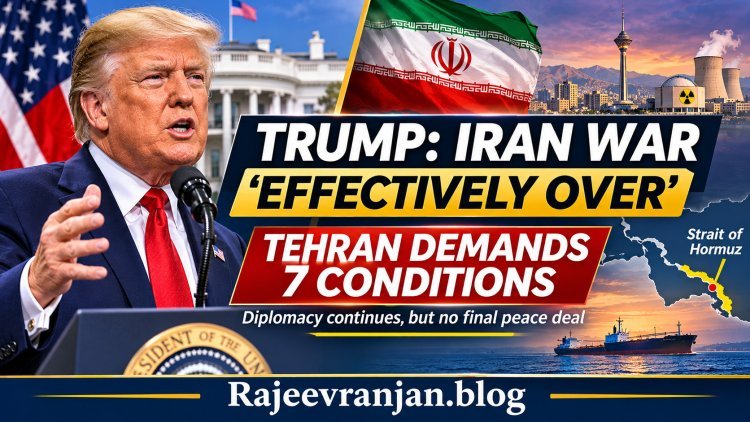

Iran War Latest: Trump Says Conflict 'Effectively Over' as Tehran Demands US Accept Seven Conditions
US President Donald Trump says the military conflict with Iran is effectively over and has signalled that further large-scale strikes are unlikely. But Tehran has challenged Washington's account of diplomatic progress, demanding the acceptance of seven conditions before a lasting settlement can be reached.
WASHINGTON / TEHRAN | November 10, 2026
The war between the United States and Iran has entered another uncertain phase after President Donald Trump declared that the conflict was effectively over from a military perspective, even as Iranian officials rejected suggestions that a peace agreement was close.
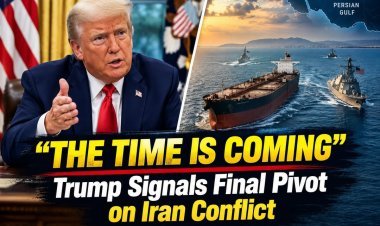
Speaking at the White House on Monday, November 9, following discussions with Qatar's prime minister, Trump said Iran's military capabilities had been significantly weakened and suggested there was little immediate need to resume major American bombing operations.
However, he stopped short of announcing a formal end to the war.
The United States continues to maintain a naval blockade affecting Iranian ports, while American forces remain deployed across the region.
Iranian security official Mohsen Rezaei responded by demanding that Washington accept Tehran's seven conditions for ending the conflict.
Rezaei also challenged reports suggesting that negotiations were making meaningful progress.
The contradictory statements reveal the central difficulty facing diplomatic efforts.
Washington is emphasizing military success and a possible negotiated settlement. Tehran is insisting that economic restrictions and military pressure must end before any durable agreement can emerge.
Despite renewed diplomatic activity, neither side has confirmed a comprehensive peace agreement.
What Did Donald Trump Say About the Iran War?
Trump made his remarks during an unscheduled appearance in the White House briefing room on November 9.
The president suggested that Iran's military position had been substantially weakened and that the United States was maintaining the existing military situation rather than preparing to launch another major offensive.
He described the conflict as effectively over in military terms.
Trump also expressed optimism about the possibility of a diplomatic settlement.
He said Iranian representatives were communicating with the United States and suggested that a resolution could be achieved.
However, his statements contained an important qualification.
Although he indicated that further major strikes were unnecessary under present circumstances, Trump warned that American forces remained ready to resume operations.
The administration has not announced a withdrawal of its military assets from the region.
Nor has it lifted the restrictions affecting Iranian maritime trade.
The distinction between military restraint and a formal peace agreement is therefore essential.
Trump's remarks describe his assessment of the conflict and Washington's immediate intentions. They do not establish that hostilities have legally or diplomatically ended.
The Associated Press reported that Trump continued to emphasize the need for a long-term agreement preventing Iran from developing nuclear weapons.
Iran Responds: Mohsen Rezaei Demands Acceptance of Seven Conditions
Tehran's response was markedly different.
Mohsen Rezaei, a senior Iranian security official, challenged the American account of the negotiations and insisted that Washington must accept Iran's conditions to bring the conflict to an end.
Rezaei used unusually confrontational language, calling on the United States to surrender to those conditions.
He also rejected what he characterized as misleading reports about negotiations.
His remarks were reported by Iranian media and subsequently carried by international and Indian news outlets on November 10.
The comments demonstrate how far apart the public positions of Washington and Tehran remain.
Trump is describing Iran as militarily weakened and increasingly willing to negotiate.
Rezaei is presenting Tehran as unwilling to accept an agreement while American military and economic pressure continues.
Neither position, by itself, proves that a final agreement is imminent.
Rezaei's demands also do not necessarily represent the detailed terms of a negotiated settlement accepted by every institution within the Iranian government.
They establish an important public negotiating position that Washington has yet to accept.
What Are Iran's Seven Conditions for Ending the War?
Iranian officials have repeatedly identified several conditions they consider necessary before meaningful negotiations can proceed.
According to Reuters and subsequent reporting, Tehran's demands include ending hostilities, removing economic restrictions and addressing the damage caused by the conflict.
The publicly reported demands concern:
-
Ending military hostilities across the affected region.
-
Lifting the American naval blockade affecting Iran.
-
Restoring normal maritime access through the Strait of Hormuz.
-
Removing US economic sanctions on Iran.
-
Releasing Iranian assets frozen abroad.
-
Addressing compensation for damage caused by the war.
-
Ending external interference in Iran's internal affairs.
The exact wording and grouping of the seven conditions vary across public reports. The list reflects the principal demands identified in reporting rather than a newly authenticated official negotiating document.
The disagreement over these requirements is substantial.
Washington has made restrictions on Iran's nuclear programme central to its negotiating position.
Tehran, meanwhile, wants major economic and security concessions before engaging in broader discussions.
The dispute therefore concerns not only what a final agreement should contain, but also which government must make the first move.
Reuters reported on November 5 that Iran had transmitted a nuclear proposal through Qatar, but an Iranian official said discussions would depend on Washington meeting Tehran's demands.
Qatar's Diplomatic Role: Why the November 9 Meeting Matters
Trump's latest comments followed a meeting with Qatari Prime Minister and Foreign Minister Sheikh Mohammed bin Abdulrahman Al-Thani.
Qatar has played an important role in facilitating indirect communication between Washington and Tehran.
The Gulf country maintains diplomatic relationships that allow it to serve as an intermediary during periods when direct negotiations are difficult.
According to the Associated Press, Qatari officials had recently presented proposals concerning Iran's nuclear programme.
The November 9 meeting provided an opportunity for Washington to assess those proposals and discuss possible arrangements for reducing hostilities.
Trump subsequently described diplomatic momentum in positive terms.
However, Iran's public response suggests that fundamental disagreements remain unresolved.
A diplomatic channel can remain active even when governments disagree about whether substantive negotiations are taking place.
That distinction helps explain the apparently contradictory statements.
Washington may view the exchange of proposals as evidence of progress, while Tehran may reject suggestions of formal negotiations before its stated conditions are met.
For Qatar, the challenge is to identify practical concessions that both sides can accept without appearing to abandon their principal demands.
Why the Strait of Hormuz Remains a Major Obstacle
The Strait of Hormuz has become one of the most important pressure points in the conflict.
The narrow waterway connects the Persian Gulf with the Gulf of Oman and serves as a crucial route for international oil and liquefied natural gas shipments.
Disruption to maritime traffic can affect global energy markets, shipping insurance and transportation costs.
The United States continues to maintain a naval blockade affecting Iranian ports.
Iran has also imposed restrictions affecting maritime access through the strait.
According to Reuters, recent diplomatic proposals have explored arrangements that could involve the restoration of shipping access in exchange for changes to American restrictions.
However, Washington and Tehran remain divided over how such measures should be implemented.
The continued blockade is particularly significant because Trump has described the military conflict as effectively over while maintaining substantial economic and military pressure.
From Tehran's perspective, those restrictions remain an active element of the confrontation.
From Washington's perspective, they provide leverage for securing nuclear and security concessions.
This disagreement helps explain why a reduction in large-scale bombing would not automatically bring the wider conflict to an end.
Is the Iran War Really Over?
The short answer is no formal end to the conflict has been confirmed.
Trump's statement reflects an assessment that Iran's military capabilities have been weakened and that another major American offensive may not be necessary.
But several developments demonstrate that the confrontation continues.
American forces remain deployed in the region.
The US naval blockade remains operational.
The Associated Press reported that American forces had conducted limited strikes against Iranian air defences during the preceding week.
It also reported that the United States had disabled a commercial vessel accused of attempting to breach the blockade.
These developments show that military activity and the risk of further escalation have not disappeared.
A lasting settlement would require clearer arrangements governing hostilities, maritime access, economic restrictions and Iran's nuclear programme.
Until those questions are resolved, declaring the war completely finished would go beyond the available evidence.
How the US Midterm Elections Have Increased Pressure on Trump
The diplomatic developments are unfolding shortly after the November 3 US midterm elections.
Democrats won control of both chambers of Congress, delivering a significant political setback to Trump's Republican Party.
The conflict with Iran has become an important domestic issue because of its economic consequences, particularly higher fuel prices.
The Associated Press reported that dissatisfaction with the prolonged conflict contributed to the political environment surrounding the election.
The results have increased pressure on the administration to explain the objectives, costs and future direction of its military strategy.
However, it would be misleading to claim that the election defeat alone caused Trump's latest statements.
Throughout the conflict, he has alternated between military threats and expressions of optimism about diplomatic negotiations.
His latest position may reflect several considerations, including regional diplomacy, military assessments and domestic political pressure.
The election outcome adds urgency to the debate without establishing Trump's private motivation.
It also increases the potential for congressional scrutiny of the administration's conduct of the war.
Republican Representative Thomas Massie has moved to force consideration of impeachment proceedings against Defense Secretary Pete Hegseth over his handling of the conflict.
Why a Peace Agreement Remains Difficult
The main obstacles are not simply disagreements over language or political symbolism.
Washington and Tehran have conflicting demands concerning the foundations of a future settlement.
The United States wants enforceable assurances that Iran will not develop nuclear weapons.
Iran wants sanctions relief, access to frozen assets, an end to the blockade and other concessions.
The two governments also disagree over the sequence of those steps.
For Washington, lifting major restrictions before obtaining nuclear commitments could reduce its negotiating leverage.
For Tehran, accepting nuclear restrictions before economic relief could leave it exposed to continued American pressure.
There is also a wider regional dimension.
Iran has demanded an end to hostilities involving other countries and armed groups, while the United States has emphasized the security concerns of its Gulf partners.
Any comprehensive agreement would therefore involve issues extending beyond bilateral relations.
The challenge for mediators is to develop a framework in which initial steps are sufficiently credible to encourage further cooperation.
That has not yet been achieved.
What Does the Latest Iran War Development Mean for India?
India has a significant economic interest in stability across the Gulf.
The country depends heavily on imported crude oil and maintains important trade and energy relationships with nations in the region.
Any prolonged disruption to the Strait of Hormuz can create additional uncertainty for energy supplies.
Higher shipping expenses, insurance costs and oil prices can affect businesses and households far beyond the immediate conflict zone.
A credible reduction in military tensions could improve market confidence and reduce concerns about interruptions to energy transportation.
However, Trump's announcement alone does not guarantee lower fuel prices.
Oil markets respond to actual supply conditions, shipping access, inventories and expectations about future developments.
India also has substantial diplomatic and people-to-people relationships across the Gulf.
Continued regional instability can affect trade logistics and the security environment for Indian nationals living and working in the region.
For New Delhi, the key issue is whether diplomacy produces a sustained reduction in risk rather than another temporary pause in escalation.
What Happens Next in the US-Iran Conflict?
The next phase will depend on whether the American and Iranian governments can move beyond conflicting public statements.
Qatar's mediation remains an important diplomatic channel.
Washington must decide whether any proposed arrangement can adequately address its nuclear and security concerns.
Tehran must determine whether the United States is prepared to make concessions on sanctions, frozen assets and maritime restrictions.
The military situation will also remain important.
Any new strikes, attacks on commercial shipping or escalation involving regional actors could weaken confidence in negotiations.
Conversely, clearly documented steps to reduce hostilities could provide evidence that the diplomatic process is producing results.
For now, the available reporting establishes a significant change in American rhetoric, but not a completed settlement.
Trump Claims the War Is Effectively Over, but Peace Remains Uncertain
Donald Trump's declaration that the military conflict with Iran is effectively over marks a notable shift in Washington's public messaging.
His comments suggest that the administration is not currently preparing another major bombing campaign and believes diplomacy remains possible.
Iran's response, however, highlights the distance between the two governments.
Tehran continues to demand substantial concessions, while Washington maintains military forces and economic restrictions.
The Strait of Hormuz remains a central obstacle, and the future of Iran's nuclear programme is unresolved.
As of November 10, 2026, there is no verified comprehensive peace agreement ending the US-Iran conflict.
Whether Trump's assessment becomes the foundation for lasting peace will depend on agreements and actions that neither side has yet confirmed.